When Silence is not an option
From the racetrack to the street: Sports exhaust systems are among the most popular tuning products for cars and motorcycles. Tuning enthusiasts and motorcycle and car lovers have been relying on REMUS exhaust systems for decades. Here you can find everything you need to know about performance exhausts. Especially in Germany and Austria, the REMUS name is renowned for its premium quality. A well‑engineered exhaust system improves your vehicle’s efficiency and thus the performance of the engine. Sports silencers also reduce back pressure at the exhaust valves, increasing engine power. This helps the exhaust system to lower emission levels. With us you’ll find: front silencers, headers, centre sections, rear silencers and matching tailpipes. Long service life thanks to high‑quality workmanship and high‑tech materials cuts costs and minimizes repairs.
Sport exhausts
FOR YOUR BIKE
Let’s take the best technology and top-quality materials from motorsport and bring them straight to the street: in our REMUS webshop you’ll find only the finest tuning products to customize your motorcycle exactly the way you want it.
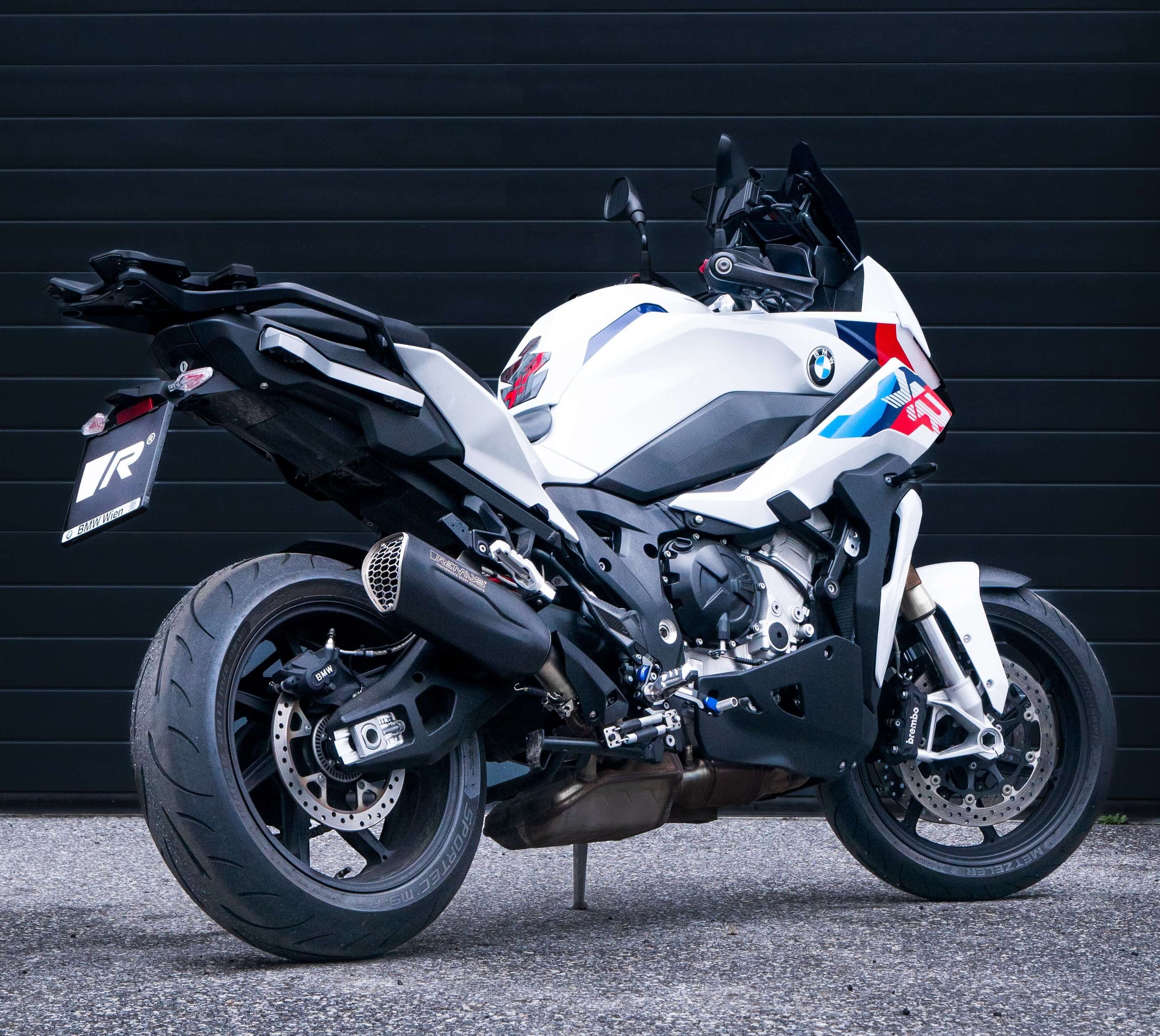
EXHAUST SYSTEMS
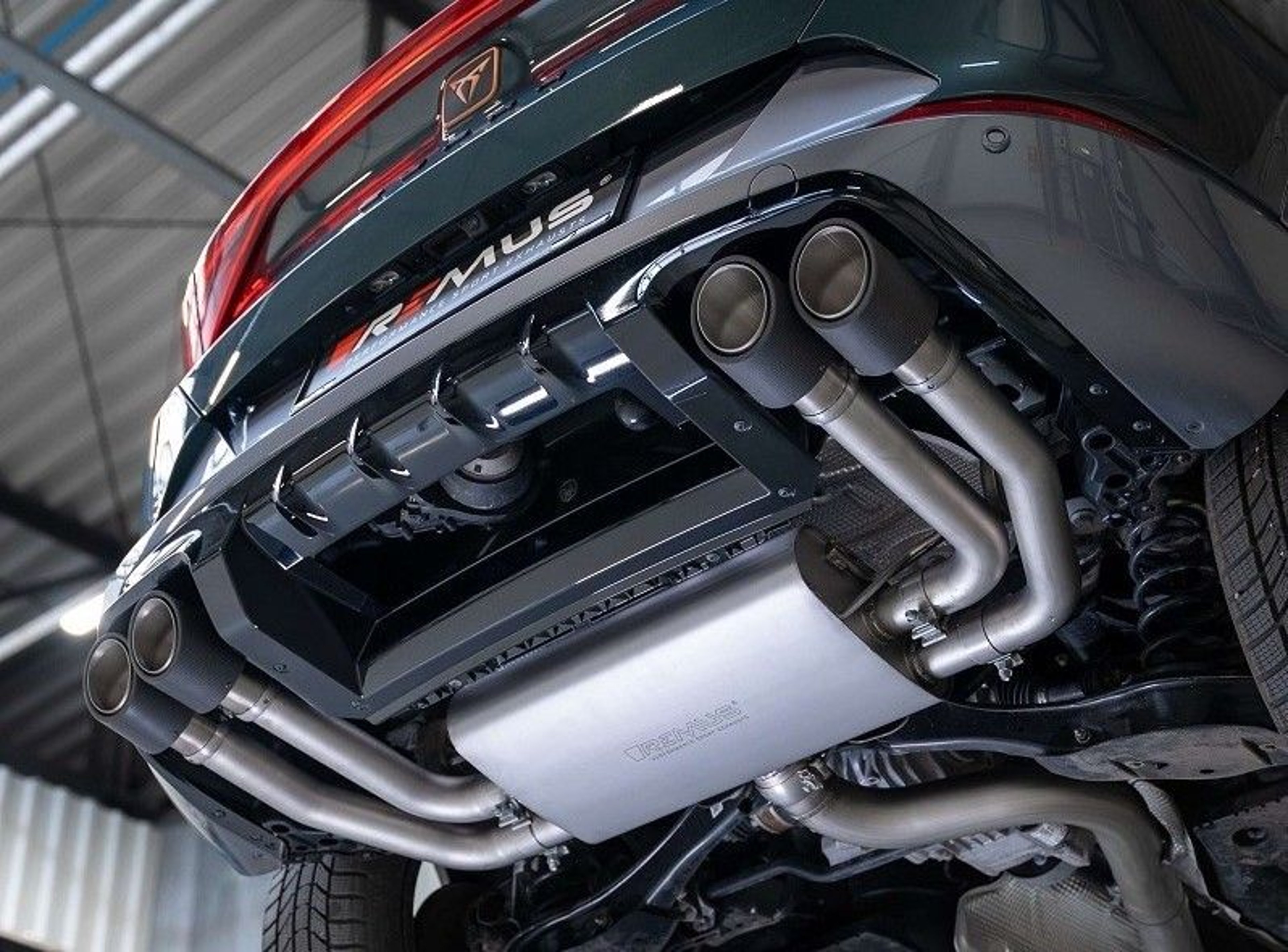
FOR YOUR CAR
In our REMUS webshop, we offer you only truly exceptional sport exhaust systems, rear silencers, center sections, front silencers, replacement tubes and stylish tailpipes for many different car brands. As a driver, you’ll find the perfect exhaust system for many models in our online store.
Your passion. Our sound. We’re on a mission to engineer the ultimate sport exhaust systems. Designed in Austria, driven by a relentless passion for perfection.
Silence is not an option. Unleash the true potential of your engine and experience sound that transforms every drive into an adventure. Your journey deserves more than just standard. It deserves the roar of REMUS. Explore the full range, follow your passion and find your sound.
Explore our ProductsWhat makes a premium sports exhaust?
5 criteria that make the difference
A sports exhaust is one of the few tuning modifications you can see, hear and feel. That is precisely why the market can be so confusing: the most expensive system for the same vehicle can cost five times as much as the cheapest and at first glance, they often look very similar.
The difference is rarely obvious at first glance. It becomes clear during technical inspection, after the second winter, when you look underneath the vehicle, and the moment you hear the sound for the thousandth time. Five criteria determine which side an exhaust system falls on.
- Approval - is the system approved for road use?
- Perfect fit - does it fit your vehicle without any modifications?
- Sound - is the sound engineered, or just louder?
- Materials and workmanship – will it last beyond the warranty period?
- Manufacturer and service – will spare parts still be available in five years?
What's street legal
Approval
The most important criterion comes first, because it outweighs all the others: an exhaust system without valid approval cannot be used on public roads regardless of how good it sounds or how well it is made. In the worst-case scenario, the vehicle's entire operating permit may become invalid, and insurance coverage could be called into question.
In Europe, a basic distinction is made between two categories:
- Homologated systems (ECE). They are tested in accordance with European regulations and bear an E-approval number directly on the component. They are approved for road use; the relevant documents must be carried in the vehicle.
- Racing parts. They are designed for use on closed circuits and are expressly not intended for public roads. They are often lighter and louder, which is precisely why they are not road legal.
How to tell: A reputable manufacturer clearly states the approval status for each vehicle rather than making blanket claims for the entire product range. They provide the approval number, include the relevant documentation, and clearly specify what applies to each model. Phrases such as “TÜV-compliant”, “eligible for registration”, or “for motorsport use” without specific details are a red flag.
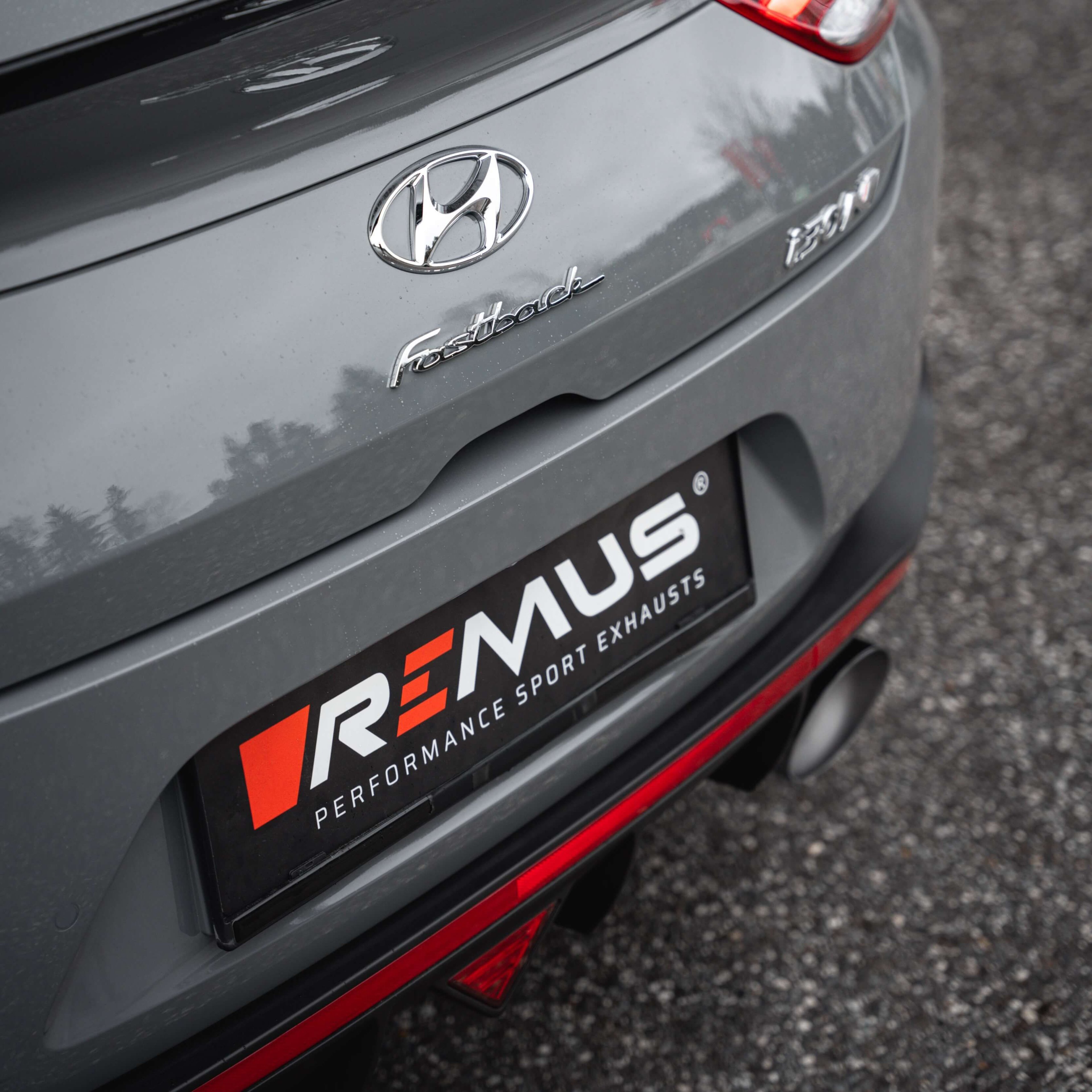
Testing comes before sound
Perfect fit
An exhaust system is a component engineered to tight tolerances. It must fit between the transmission, rear axle, fuel tank and bodywork, accommodate thermal expansion and remain free from contact throughout the entire rev range. Whether it achieves all this is determined long before installation - during development.
Suppliers who design systems based on catalogue measurements produce parts that fit “in principle.” In the workshop, that means bending them into shape, repositioning hangers and, if necessary, welding. Every one of these modifications costs money, can jeopardise road approval and makes any subsequent warranty claim virtually impossible.
Manufacturers with original equipment experience work differently: development on the actual vehicle, validation on test benches, and approval under production conditions. The result is a system that installs perfectly using the supplied hardware - and stays firmly in place.
How to recognize it: vehicle-specific part numbers instead of universal solutions, clear details on engine type, model year and equipment variants, a complete installation kit included, and easy-to-follow installation instructions.
Quick question: Why do two identical exhaust systems sound different?
Because sound doesn't come from the exhaust alone. Engine design, cylinder count, forced induction, particulate filters and even the bodywork all influence the result. That's why reputable manufacturers develop the sound specifically for each vehicle and let you hear it rather than trying to describe it.
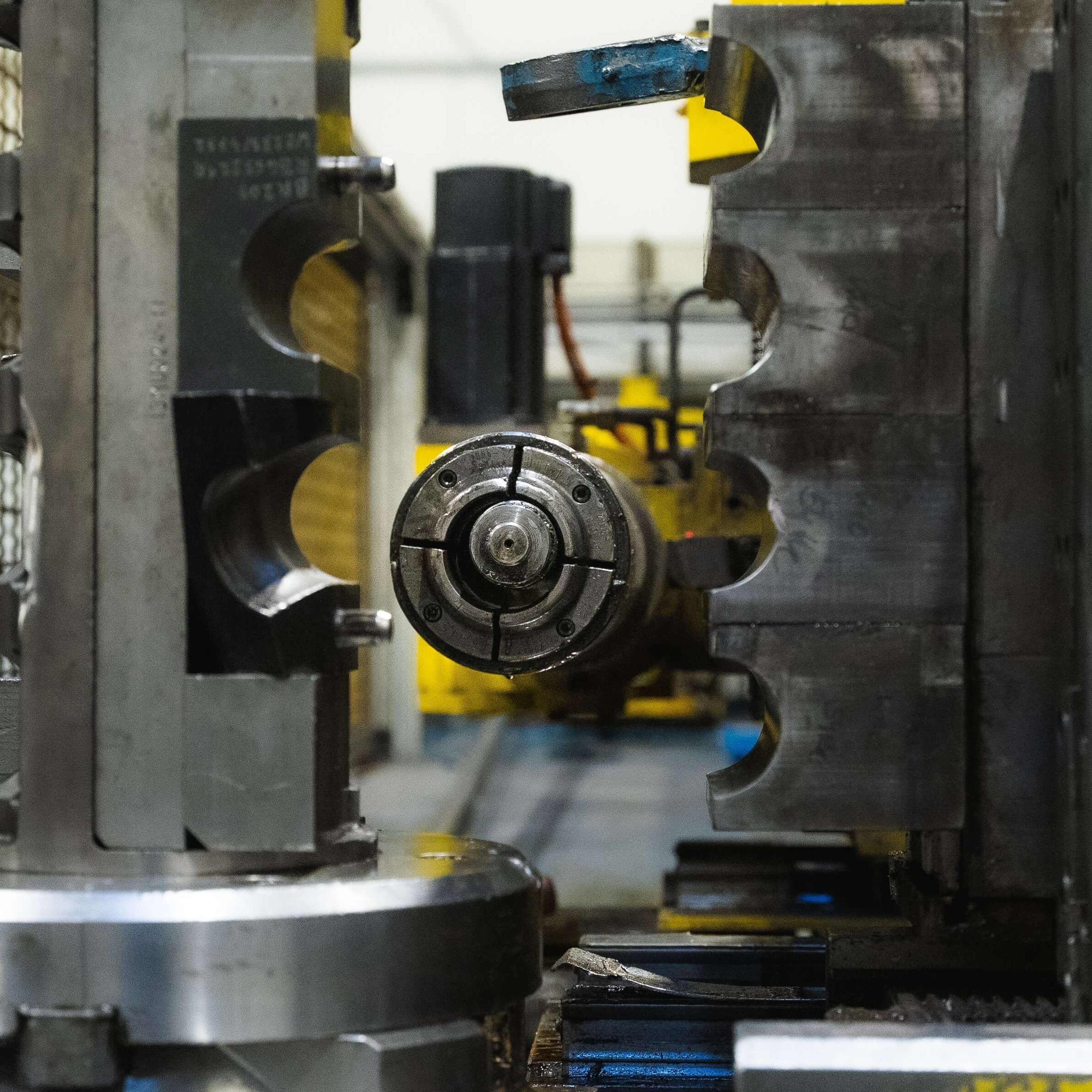
Engineered, not omitted
Sound
The easiest way to increase volume is to remove sound insulation. The result is loud, but it isn't sound, it's noise. It drones at constant motorway speeds, becomes unpleasant when the engine is cold, and after three months it annoys the driver more than the neighbours.
True sound development is acoustic engineering. Pipe diameter and length, chamber volume, absorption and reflection surfaces, material thickness and tailpipe geometry are calculated, simulated and measured. The goal is a sound profile that remains refined at idle, becomes powerful under load and avoids drone at partial throttle.
This level of effort is precisely why vehicle manufacturers outsource acoustic development and why they turn to the same suppliers that also serve the aftermarket.
How to tell: There are sound samples for your specific vehicle, not just for a vehicle from the same manufacturer. Recordings demonstrate idling, load changes and, where applicable, the difference between the valve open and closed. And the description defines the sound character, rather than simply stating a decibel level.
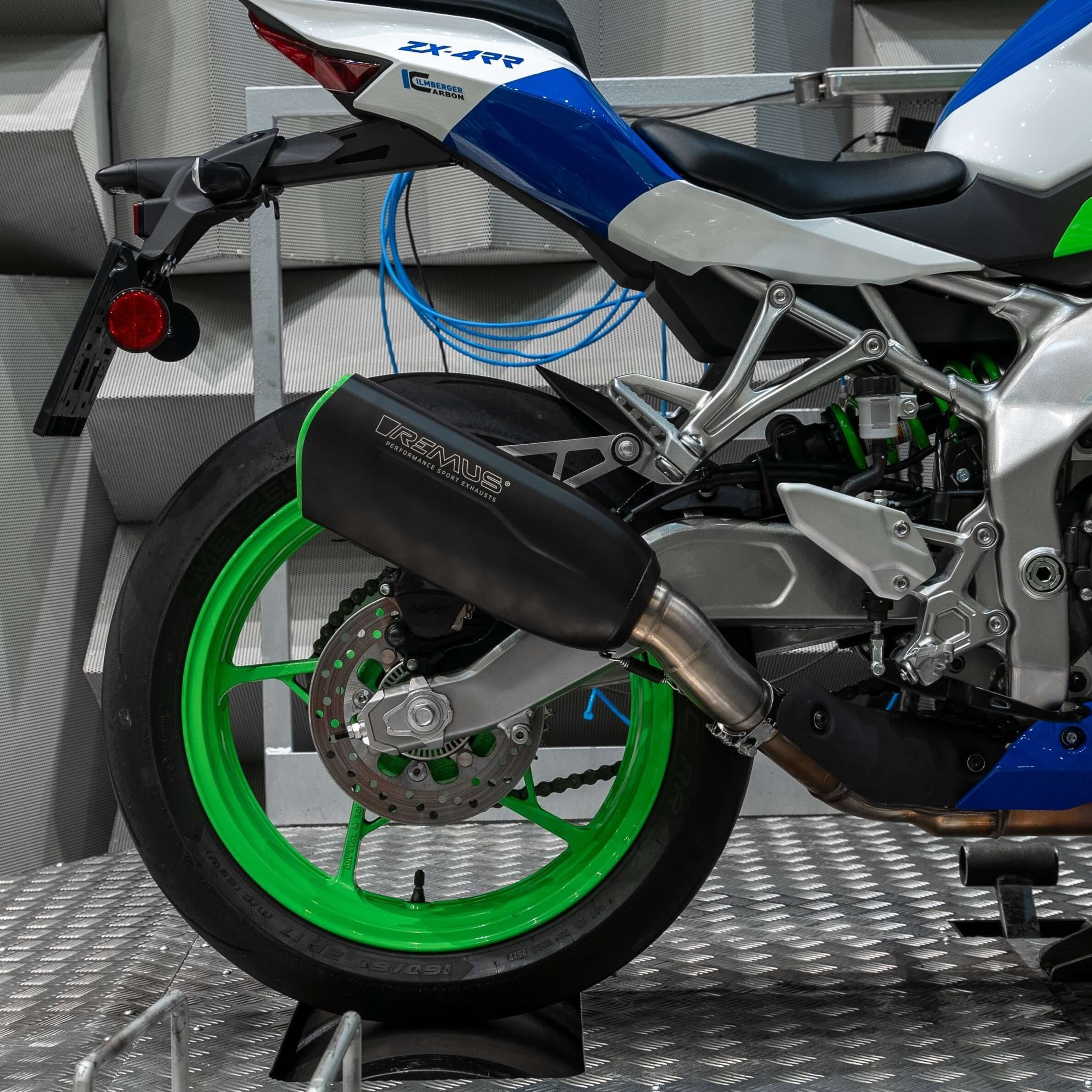
What you can see and touch
Materials & processing
An exhaust system operates under conditions that few other vehicle components have to withstand: temperatures of several hundred degrees, constant hot-cold cycles, vibrations, road salt, stone chips and condensation from within.
The usual materials:
- Stainless steel
Highly corrosion-resistant, durable and easy to weld
The standard for premium road exhaust systems - Titanium
Significantly lighter, highly heat-resistant, distinctive discoloration
Weight-optimized systems, motorcycles, motorsport - Carbon
Extremely lightweight with a distinctive look, typically used as an outer shell
Rear silencer sleeves and tips - Aluminized steel
Affordable, shorter service life
Entry-level pricing, not suitable for premium applications
More important than the material itself is the craftsmanship. It is the truest mark of quality, because it cannot simply be claimed, it has to be demonstrated.
Weld seams: uniform, with no heat tint indicating excessive heat input; visible seams should ideally be TIG-welded.
Pipe bends: consistent cross-section throughout the curve. Collapsed or creased bends restrict flow and therefore reduce performance.
Hangers and rubber mounts: OEM quality, not an improvised solution.
Tailpipes: cleanly finished edges, even protrusion, and precise alignment with the bumper or fairing.
Inside: Sound-absorbing material that won't blow out after just two seasons.
How to tell: A manufacturer that takes pride in its craftsmanship will show close-ups of the welds and internal construction. If all you see are rendered images and vehicle photos, there may be a reason for that.
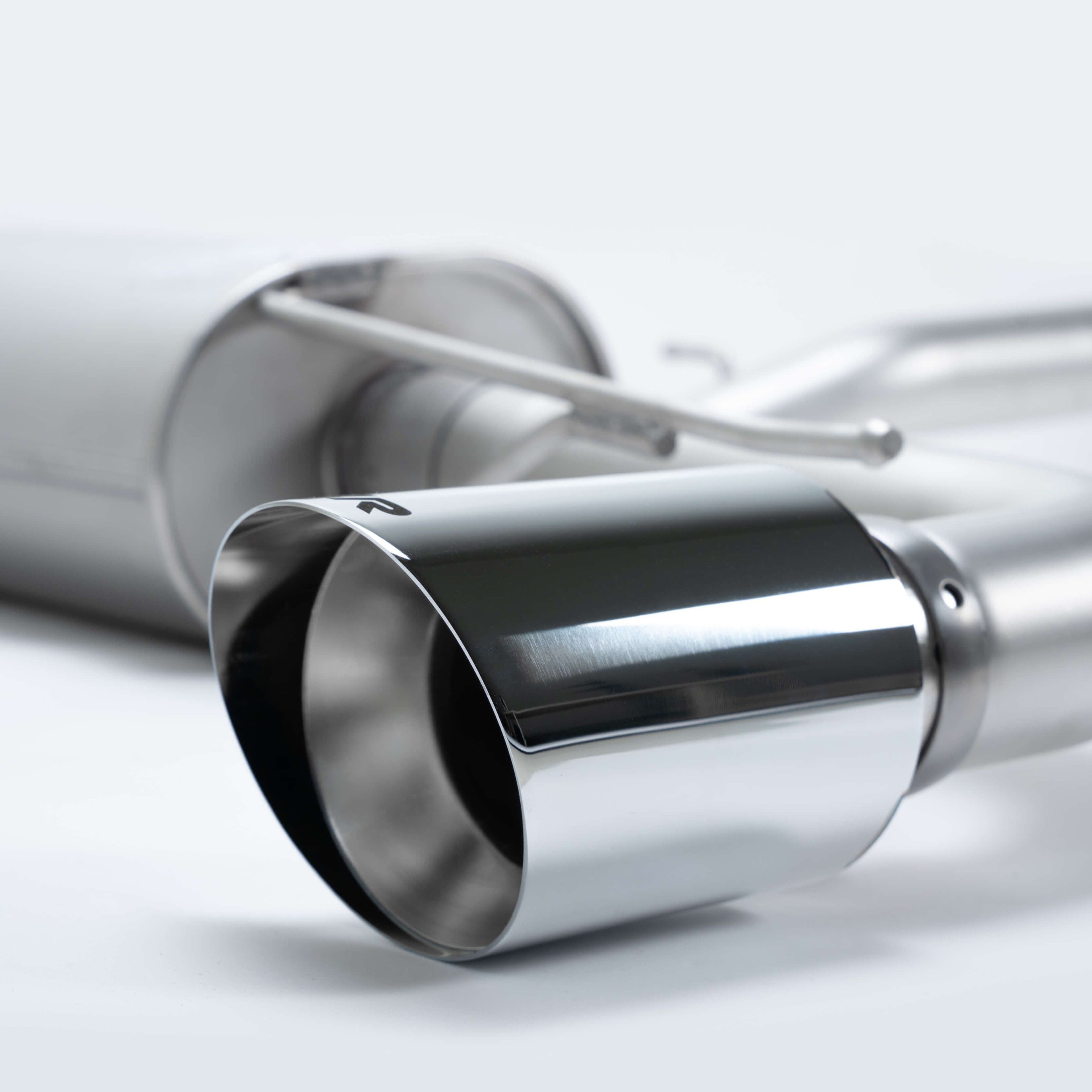
Who will still stand behind it in five years?
Manufacturer and Service
A high-quality exhaust system will outlast the vehicle it is fitted to. That makes the manufacturer an important consideration when buying—not out of brand loyalty, but for practical reasons: spare parts, rubber mounts, gaskets, tailpipe trims, a point of contact for warranty claims and, when selling the vehicle, a name the buyer recognizes.
Three questions to clarify who you're dealing with before making a purchase:
- Does the supplier manufacture its own products, or is it merely a reseller? In-house production means control over materials, tolerances and quality, as well as the ability to reproduce a spare part ten years from now.
- Does the company have original equipment experience? Anyone developing production exhaust systems for vehicle manufacturers works to automotive standards, with documented testing and traceability. These processes do not simply disappear when the same company builds an aftermarket exhaust system.
- How extensive is the service network? In the event of a warranty claim, having a nearby dealer who knows and installs the brand is worth more than the lowest online price.
How to recognize it: a transparent company history, clearly identified production sites, disclosed certifications, a functional dealer locator, and warranty terms you can read before you buy.
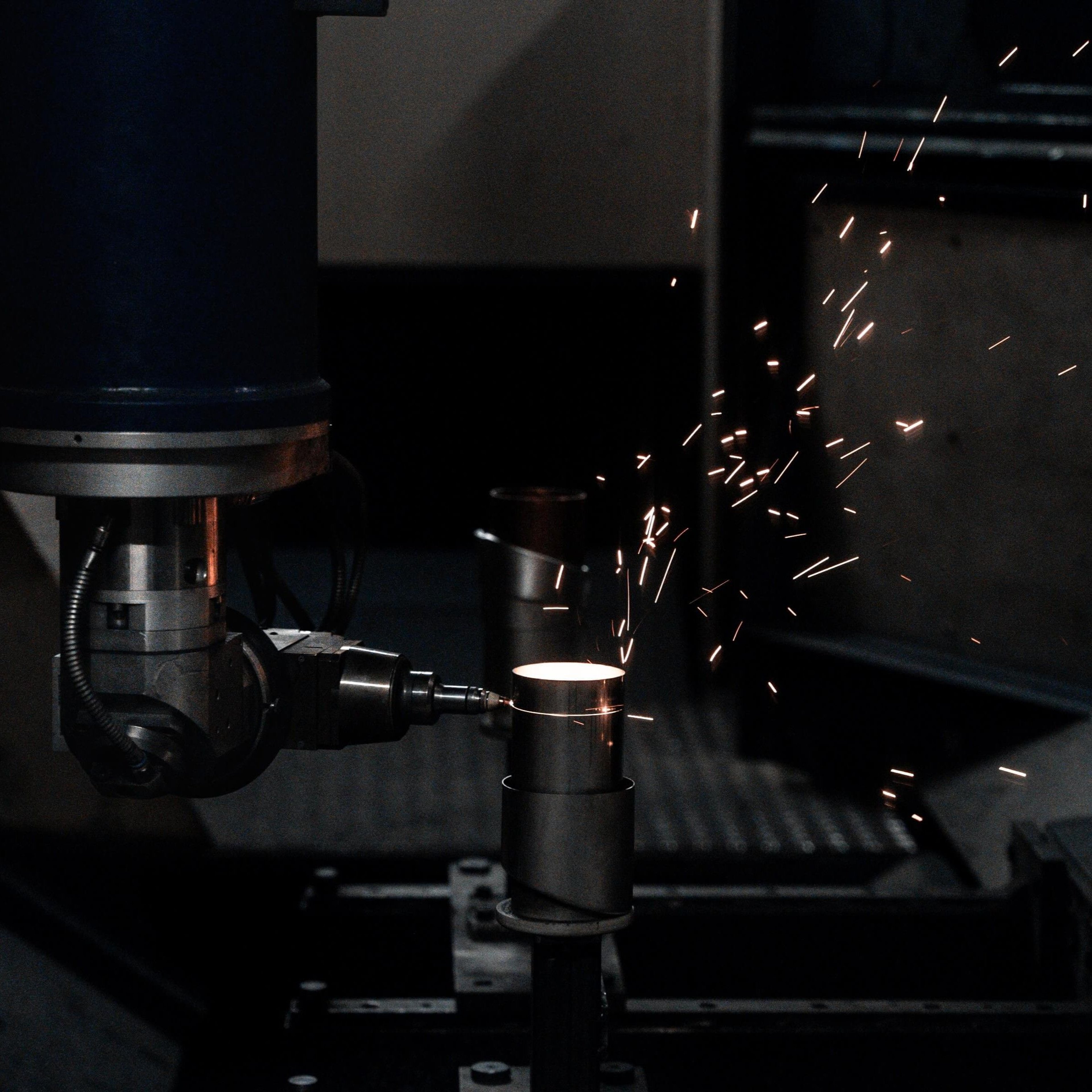
And where does REMUS stand?
These five criteria are not just a marketing checklist; they are the benchmark we hold ourselves to. For completeness, here they are in the same order:
- Approval: Our road-legal systems are ECE-approved; the approval status is specified for each vehicle. Racing products are clearly marked as such.
- Perfect fit: Development from initial design sketches through simulation and prototyping to series production, validated on our own test benches and dedicated pass-by noise test track. Certified to ISO 9001, ISO 14001 and TISAX, and to the IATF standard for original equipment manufacturing.
- Sound: Acoustic development is our core expertise, it’s why vehicle manufacturers choose us. Every system includes a sound sample for the specific vehicle.
- Materials and workmanship: In-house production in Europe, with forming technology and thermal management handled within the corporate group.
- Manufacturer and service: Founded in 1990, REMUS is an original equipment manufacturer for brands including Mercedes-AMG, Porsche, Lamborghini, Bentley, McLaren, Aston Martin, BMW, Audi, Volkswagen and Ducati. More than 4,000 dealer partners in over 60 countries. A technical partner in the DTM since 2017 and a partner of the Nürburgring 24 Hours since 2019.